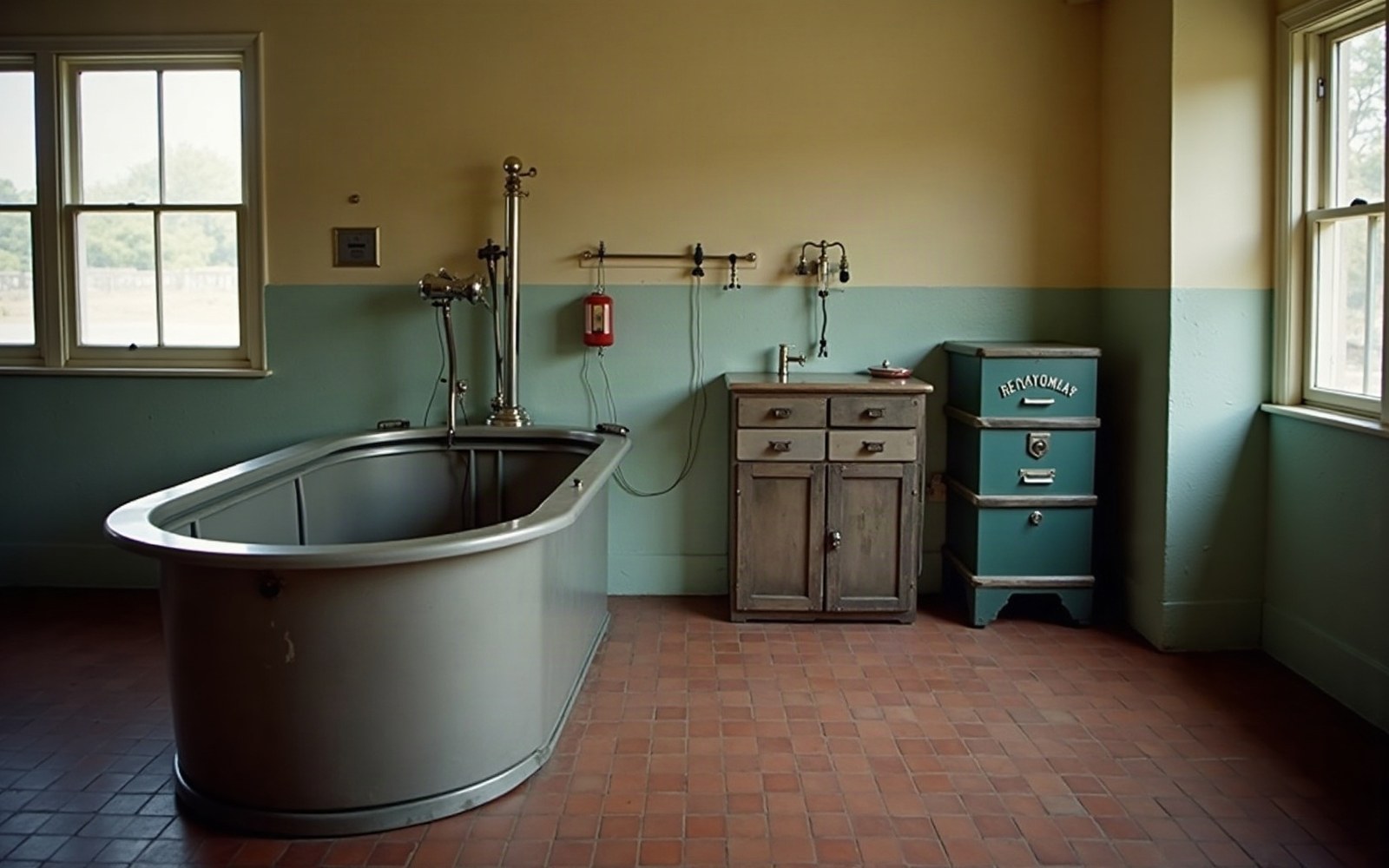
A steel tank with a figure-eight plan and lateral arms: the object's dimensions, its manufacturer, and the epidemic context that made it standard issue.
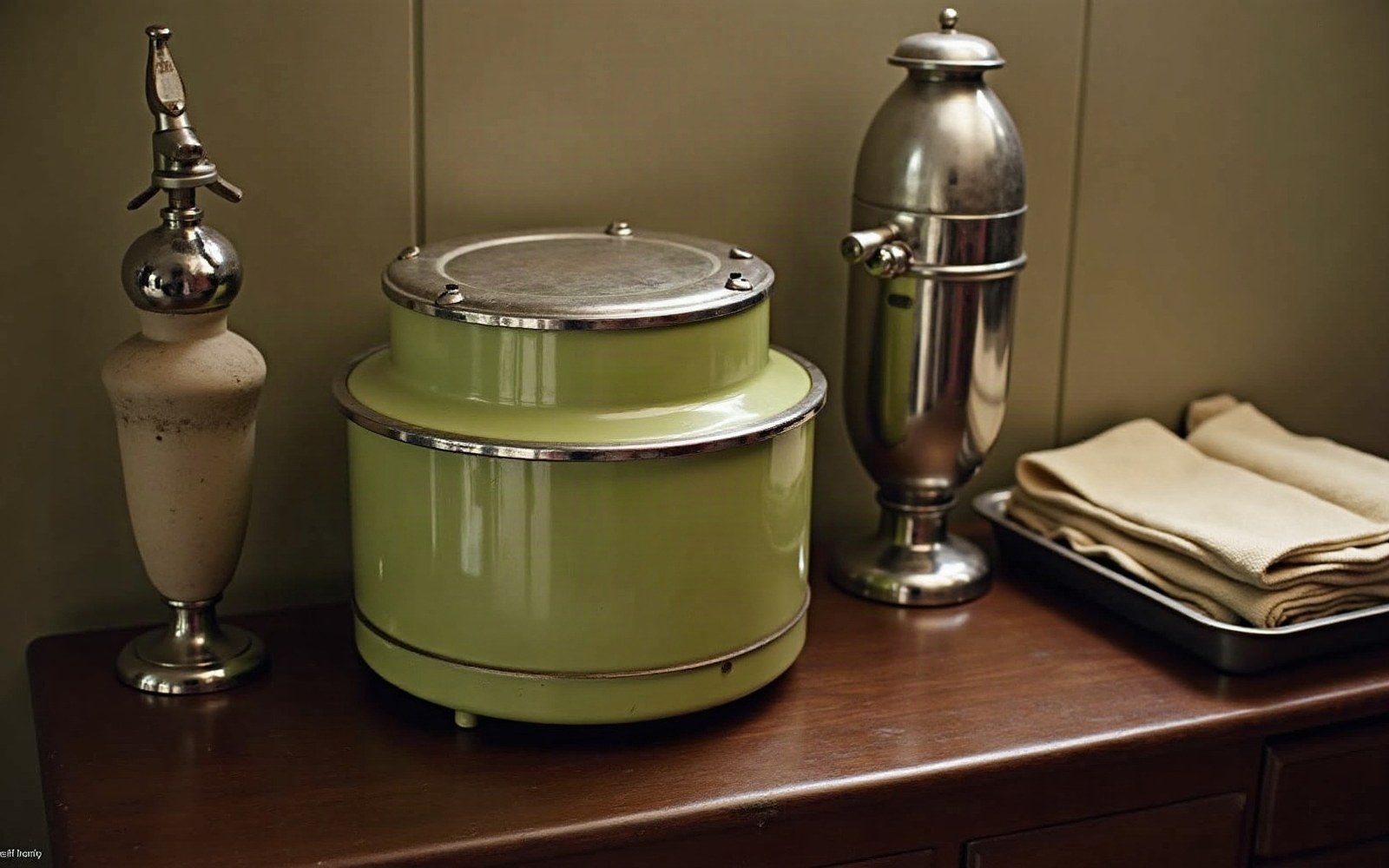
The Hubbard tank was a large hydrotherapy vessel designed to allow a recumbent patient to be moved through warm water without having to stand. Its characteristic plan — sometimes described as cruciform, more accurately as a figure-eight with lateral arms — gave it enough internal volume for a supine adult while allowing an attendant standing at the side to reach across the patient's limbs. Manufactured in enamelled cast iron or, in later versions, stainless steel, the standard tank measured roughly eight feet in length and held water at a sustained therapeutic temperature, maintained by an internal heating element and circulating pump.
Chronology
- Early 1920sLeroy Hubbard develops the tank design at Warm Springs, Georgia
- Late 1920stanks begin appearing in orthopaedic and rehabilitation hydrotherapy suites across the United States
- 1940s–early 1950spolio epidemic expansion drives widespread adoption; tanks installed at Rancho Los Amigos and comparable centres
- 1955Salk vaccine licensure begins reducing the acute-polio patient population the tank was principally designed to serve
The name came not from the shape but from the designer. Leroy Hubbard was a physician at Warm Springs, Georgia, working in the early 1920s with patients whose limbs had been weakened by poliomyelitis. His reasoning was straightforward: buoyancy reduces the effective load on weakened musculature, allowing movement that gravity would otherwise prevent. The tank was designed to make that movement achievable in a supervised, controlled setting. By the late 1920s, tanks built to his specification were appearing in dedicated hydrotherapy suites attached to orthopaedic and rehabilitation wards across the United States.
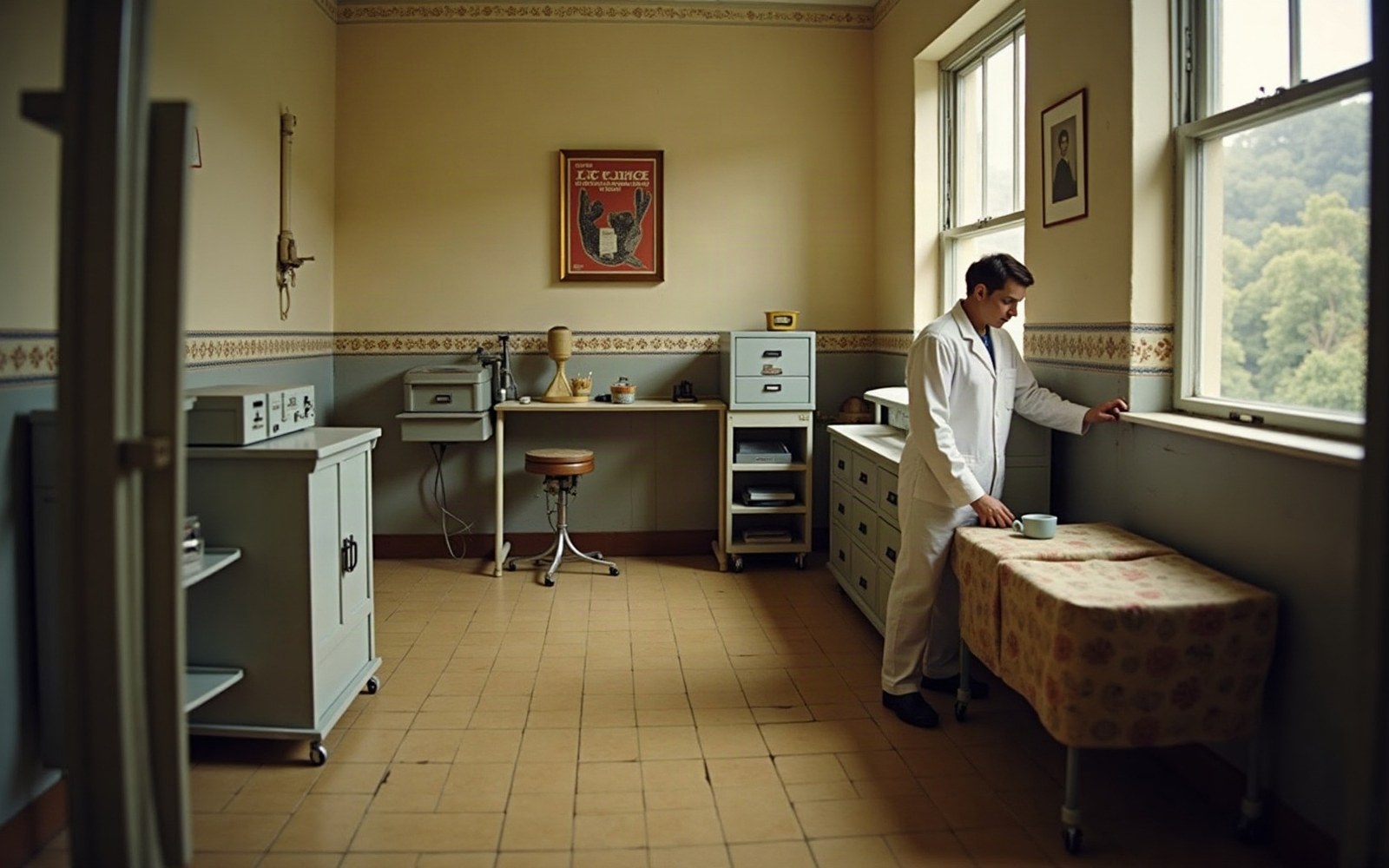
The polio epidemics of the 1940s and early 1950s drove demand sharply upward. At Rancho Los Amigos National Rehabilitation Center in Los Angeles County — one of the largest respiratory polio centres in the country — Hubbard tanks occupied a dedicated wing alongside the rows of iron lungs that had become the ward's defining image. The tank represented a different moment in the patient's course: once the acute respiratory phase had stabilised, hydrotherapy offered a means of working limbs that had lost significant muscle bulk. Elizabeth Kenny's approach to polio management, which attracted fierce professional debate through the 1940s, also incorporated warm-water work, lending the Hubbard tank an additional layer of contested meaning within the period literature.
The American Physical Therapy Association, which began in 1921 as the American Women's Physical Therapeutic Association, documented equipment standards for hydrotherapy departments during the postwar expansion of rehabilitation services. The Hubbard tank appeared consistently in those inventories — a named, datable object whose presence in a ward photograph reliably indicates a building equipped after the mid-1920s and before the Salk vaccine of 1955 began to reduce the patient population that had justified it.