Drinker's Machine and Emerson's Revision
Two engineers, a patent dispute, and the iron lung: how Emerson's 1931 revision sold at about a third of the price of Drinker's 1928 cabinet.
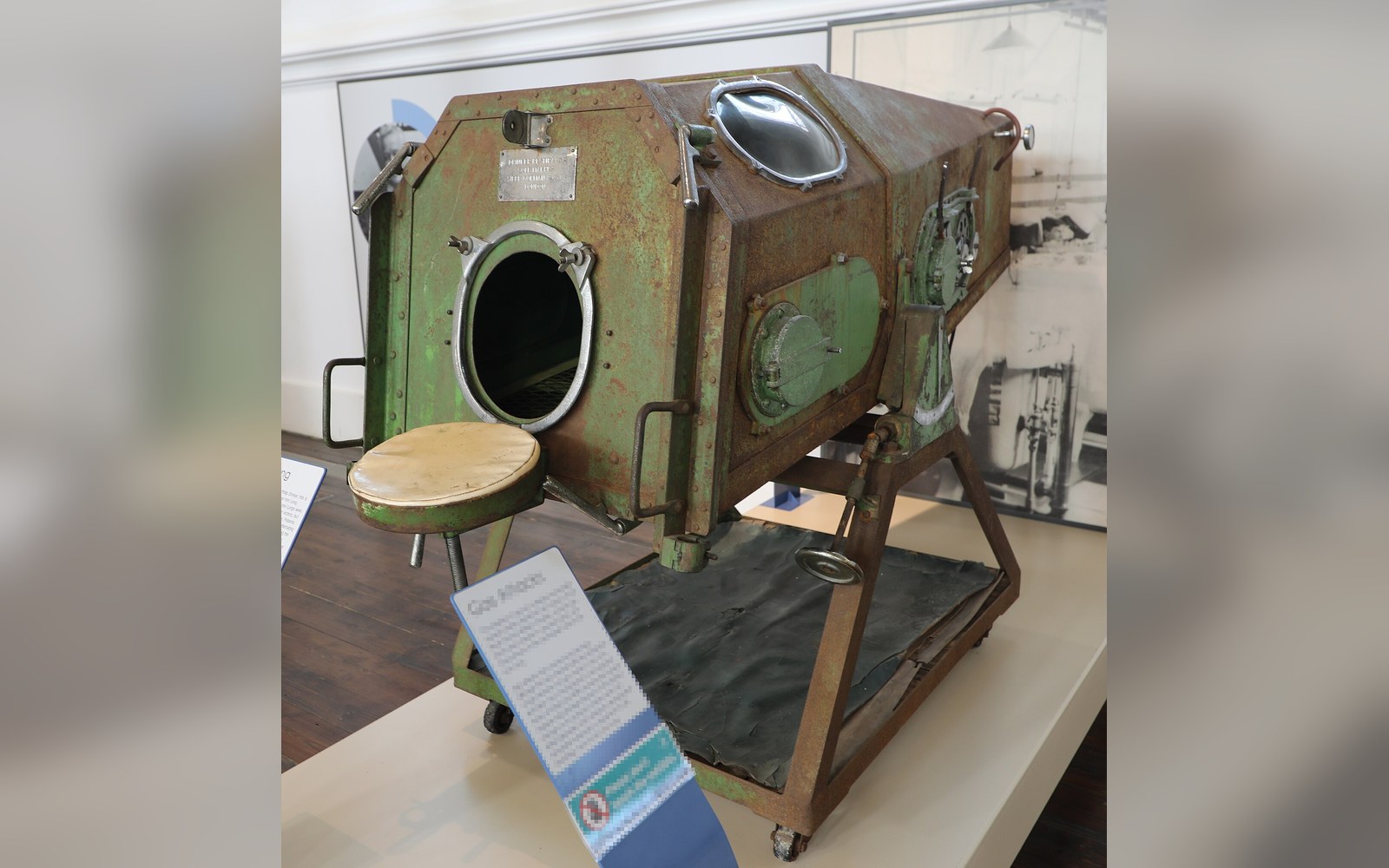
Philip Drinker was not a physician. He was an industrial hygienist at Harvard, working in the early 1920s on the problem of gases in mines and factories, when he turned his attention to the mechanics of breathing. The specific problem was ventilatory failure in poliomyelitis — children whose respiratory muscles were paralysed by the virus had no mechanism of their own to draw air into their lungs. The clinical answer had been manual artificial respiration, a labour-intensive and imprecise intervention requiring attendants to work in shifts. What Drinker proposed was a machine that would do the work of the chest wall itself.
The 1928 apparatus
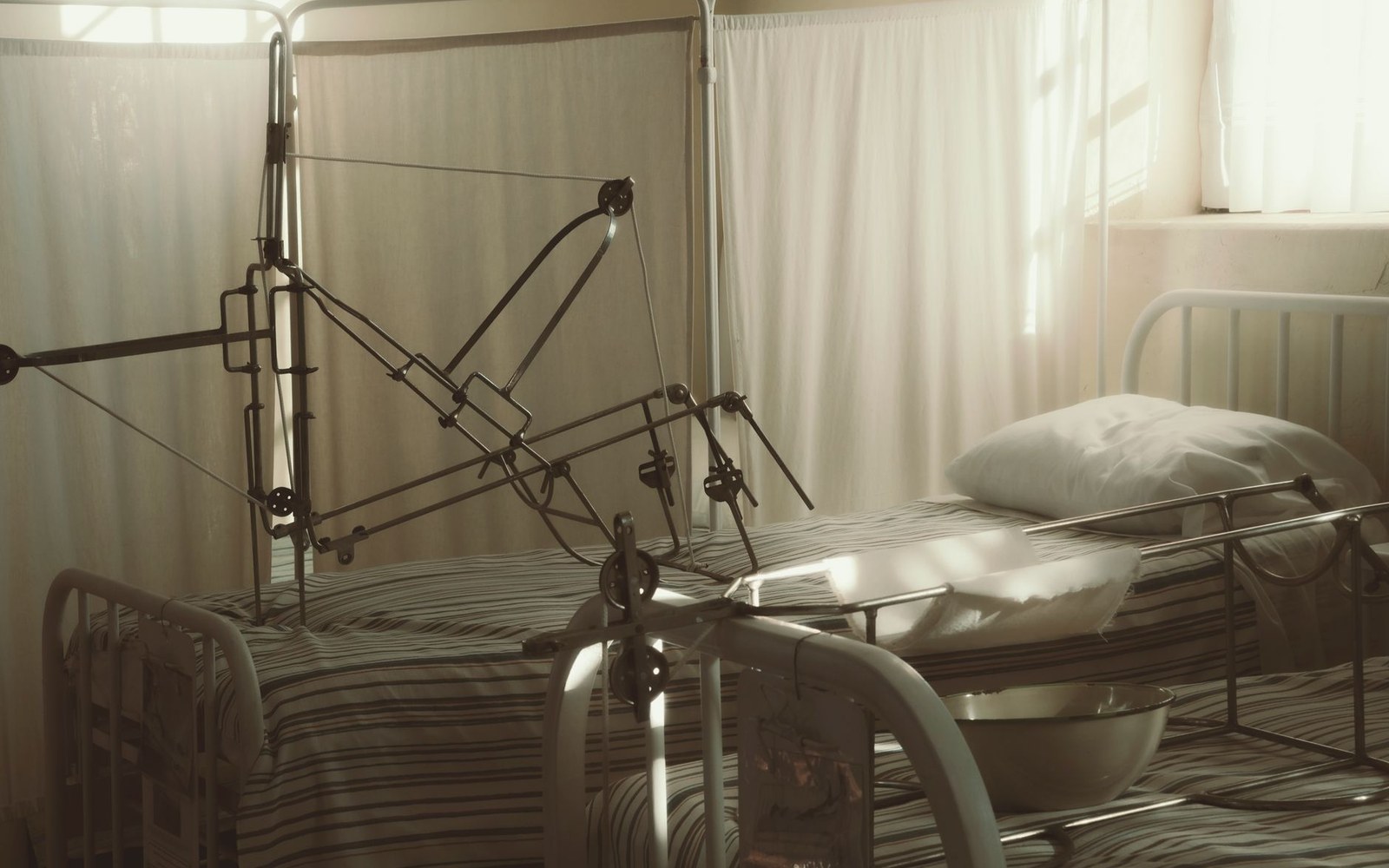
Working with his colleague Louis Shaw at Harvard, Drinker built a prototype in 1928 from standard industrial components: an airtight steel cylinder long enough to enclose the patient's body to the neck, a rubber collar to seal the gap, and an electrically driven blower that could alternately reduce and restore pressure inside the chamber. The principle was negative-pressure ventilation — when the air pressure inside the tank dropped below atmospheric, the chest expanded passively and air entered the lungs; when pressure was restored, the chest fell and exhalation followed. The patient breathed because the machine breathed around them.
Key dates
- 1928Drinker and Shaw prototype; first clinical use, Children's Hospital Boston, October
- 1929Drinker and Shaw publish in the Journal of Clinical Investigation
- 1931John Emerson produces his revised iron lung
- 1931–mid-1930sPatent dispute between Drinker and Emerson; settled with Emerson continuing manufacture
- 1952Peak American polio season; J.H. Emerson Company manufacture at capacity
- 1955Salk vaccine licensed; demand for iron lungs begins long decline
The first clinical use came in October 1928 at Children's Hospital Boston, where an eight-year-old girl in respiratory failure was placed in the apparatus. She survived. The Harvard device was unwieldy — roughly 900 pounds of steel — and assembled from components that drove the unit cost to around $1,500 at late-1920s prices, a figure equivalent to several months' wages for a hospital orderly. The Consolidated Gas Company of New York contributed funding that allowed Harvard to place machines at several hospitals without charge, but the underlying economics of manufacture had not been solved.
Drinker and Shaw published their account in the Journal of Clinical Investigation in 1929, and within months the apparatus was being reproduced, imperfectly, by hospital engineering departments in Britain, Australia, and elsewhere. Each copy was effectively a bespoke object. A machine built by the medical engineering workshop at a London teaching hospital would differ in its tolerances, its seals, and its blower characteristics from the Boston original. Clinical staff working across institutions could not assume the controls they knew. Standardisation of any kind lay entirely in the future.
Emerson's revision
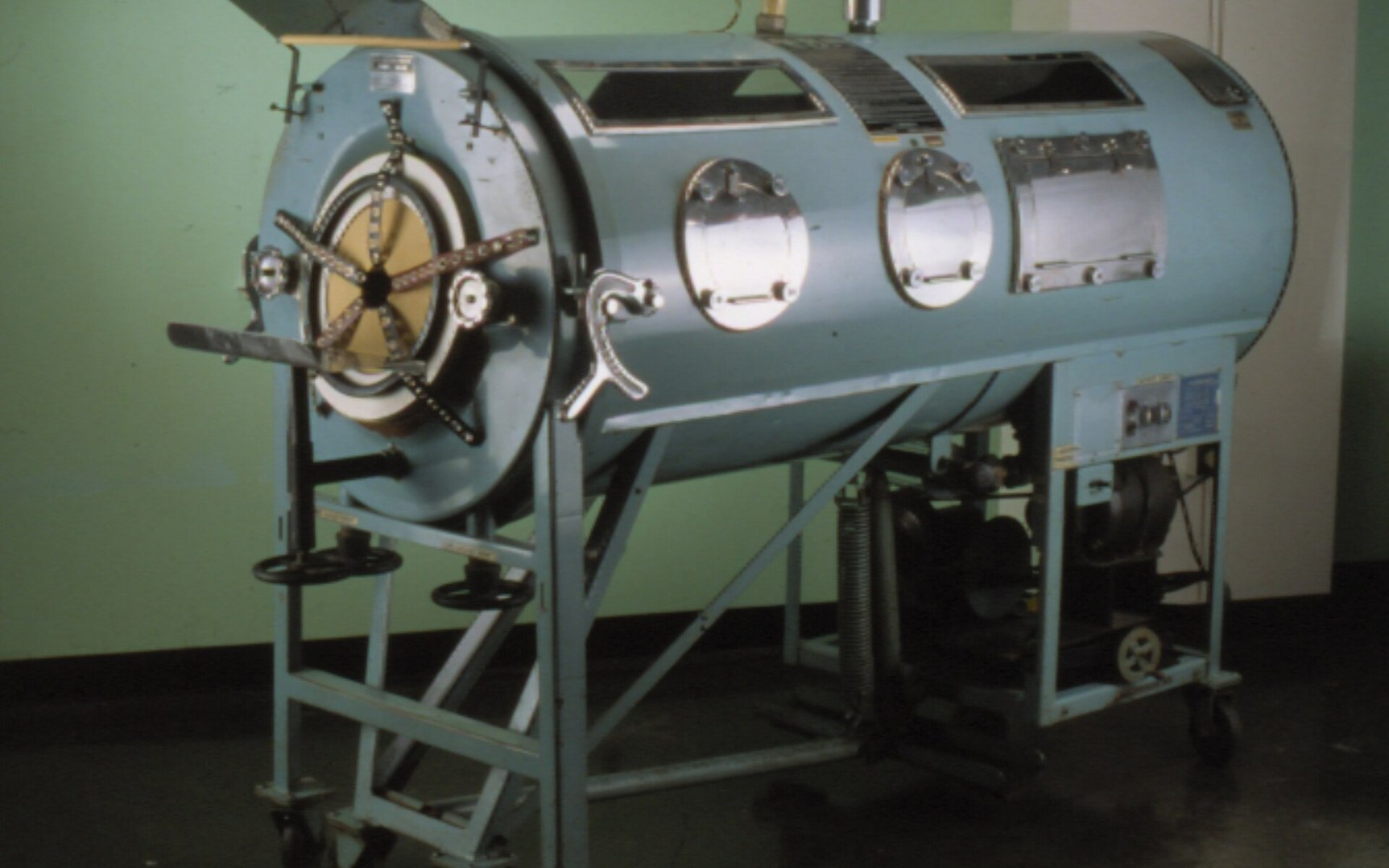
John Haven Emerson was a Connecticut-born manufacturer who had been building medical equipment for some years before this. In 1931 he produced his own iron lung — a machine he had redesigned from first principles rather than copying Drinker's specifications. The Emerson version used a simpler motorised bellows arrangement with fewer machined parts, a redesigned collar seal, and an exterior of welded sheet metal that could be fabricated at lower cost than the heavier Drinker tank. Emerson priced his machine at roughly a third of the Drinker figure, and progressive refinements to the manufacturing process allowed that figure to fall materially over the following years, at a time when hospitals were operating under Depression-era budget constraints.
The response from Drinker was a patent-infringement suit. Drinker had taken out patents on the key mechanical elements of his apparatus, and Emerson's machine infringed several of them. The litigation was consequential because it exposed precisely what kind of object the iron lung was: a commercial product with a named inventor asserting proprietary rights, at the same moment that children with poliomyelitis needed the device to survive. Emerson's counter-argument — that a life-sustaining apparatus could not ethically be held behind a patent — did not succeed as a legal proposition, but the dispute was eventually settled, and Emerson continued manufacturing. The settlement's terms allowed the J.H. Emerson Company to produce and sell the machine, and the company went on to become the dominant American supplier.
By the mid-1930s a hospital that wished to stock one Emerson iron lung could acquire it for a price that, while still substantial, had dropped significantly below the original Harvard unit cost. The practical consequence was that smaller municipal hospitals and county facilities — institutions without research endowments or access to philanthropic connections like those of the Warm Springs Foundation — could contemplate purchasing one or two machines rather than petitioning for a loan from a major medical centre. The machine was becoming, if not routine equipment, at least achievable equipment.
What the production figures show
The 1952 polio season made the adequacy of that supply a national emergency. Roughly 57,600 cases were reported across the United States that year, the highest total in the country's recorded history, and a significant fraction involved respiratory compromise requiring mechanical ventilation. The J.H. Emerson Company's manufacturing capacity was pushed to its limit; accounts from hospital administrators in states with concentrated outbreaks describe waiting lists for machines and emergency transfers of patients between facilities equipped with them and those that were not. Rancho Los Amigos Hospital in Los Angeles County, which became the largest respiratory polio centre in the United States, maintained a floor of iron lungs in numbers that would have been logistically impossible had the per-unit cost remained at the original Harvard level.
The physical differences between the two machines mattered to the people who worked alongside them. The Drinker apparatus was heavier and more difficult to manoeuvre in a ward; gaining access to a patient required lifting the lid of the tank and breaking the pressure seal, an operation that took time. Emerson's version introduced side access panels and a more accessible design that ward nurses and physiotherapy staff navigated in daily practice. The parallel bars and plinths of a rehabilitation gymnasium were irrelevant to a patient enclosed in a tank; the iron lung defined a different category of clinical space, one governed by engineers as much as therapists, and the specific engineering decisions Emerson made had direct consequences for what that space could be.
Neither machine solved the underlying problem of poliomyelitis. That required the Salk vaccine, licensed in 1955, and Albert Sabin's oral variant, which entered widespread use in the early 1960s. What Drinker built in 1928 and Emerson revised in 1931 was a holding apparatus — a way of keeping breathing possible until either recovery occurred or the epidemic was ended by other means. That the holding was physically possible at sufficient scale in 1952 owed something to the patent dispute that settled in Emerson's favour twenty years earlier, and to the manufacturing economies that followed it.
| Drinker/Shaw machine | approximately 900 lb steel tank; blower-driven pressure cycling; ~$1,500 original unit cost; bespoke manufacturing |
|---|---|
| Emerson machine | welded sheet metal; bellows-driven; lower per-unit cost through manufacturing refinement; side access panels; dominant US supplier by mid-century |