Per Henrik Ling and the Stockholm Curriculum, 1813
The institute that gave movement a syllabus
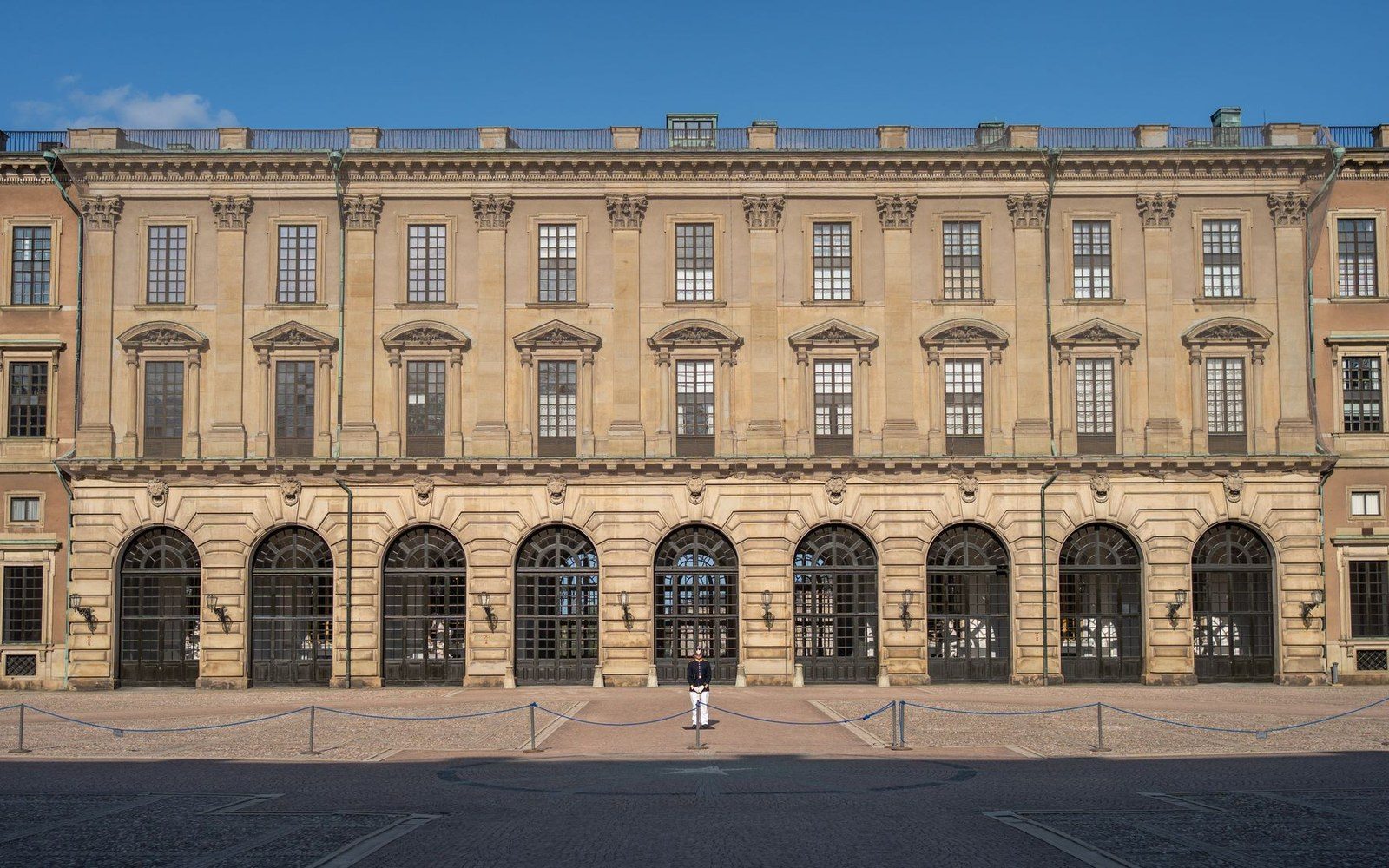
In February 1813, the Swedish government granted Per Henrik Ling the funds and the mandate to open a school in Stockholm dedicated to the systematic study and teaching of bodily movement. The institution he founded — the Royal Gymnastic Central Institute, Kungliga Gymnastiska Centralinstitutet — was not a gymnasium in the colloquial sense. It was, by deliberate design, a state-sponsored training college whose graduates would carry a standardised curriculum into military academies, schools, and eventually hospitals across Sweden and beyond. That founding moment is the earliest dateable point at which a structured body of knowledge about physical movement acquired institutional form, state funding, and a replicable teaching method.

Ling had arrived at his project by an unusual route. Born in Ljunga in 1776, he had studied in Copenhagen and spent years in Finland and England before returning to Sweden with a serious interest in fencing, anatomy, and what he described as the relationship between muscular use and general bodily condition. He was already teaching at Lund University when his proposals for a centralised movement institute reached the government. His case was, at its core, an argument about knowledge: that the principles governing how the human body moved could be codified, taught, and examined, and that random tradition or craft guild secrecy were inadequate vessels for them.
Chronology
- 1776Per Henrik Ling born in Ljunga, Sweden
- 5 November 1813Royal Gymnastic Central Institute opens in Stockholm
- 1839Ling dies; Institute continues under successive directors
- 1850sMathias Roth introduces the Swedish method to England
- 1894Society of Trained Masseuses founded in London, adopting credential logic from the Stockholm model
- 1920Chartered Society of Physiotherapy receives its royal charter
The Royal Gymnastic Central Institute opened in Stockholm on 5 November 1813. Ling served as its director until his death in 1839 — twenty-six years in which the school's curriculum was shaped almost entirely by his taxonomic ambitions. He divided what he called gymnastics into four principal branches: pedagogical gymnastics, designed for the schoolroom and aimed at healthy physical development in children; military gymnastics, concerned with the strength, endurance, and coordination required of soldiers; medical gymnastics, intended to address pathological states through prescribed movement; and aesthetic gymnastics, which covered expressive bodily movement including elements of dance and performance. These were not loose categories. Each branch had its own rationale, its own set of exercises, and its own target population. The division was itself a kind of argument — that movement was not one thing but a family of related practices, differentiated by purpose and governed by knowable principles.
Medical gymnastics and the road to a profession
The branch that carried the longest institutional consequence was medical gymnastics — medicinsk gymnastik — the part of Ling's taxonomy that positioned prescribed movement as a response to disordered function. This was the ancestor of what the nineteenth century would eventually call physiotherapy. Ling was not himself a physician, and the medical establishment of his era was not uniformly welcoming. Swedish doctors debated whether systematic movement had any proper claim to therapeutic function at all. But the Institute trained practitioners who worked alongside physicians, and by mid-century the export of that training model — to Germany, Britain, the United States, and further — had begun the slow process by which medical gymnastics became a recognisable professional category separate from both medicine and traditional massage.
The curriculum Ling constructed emphasised the observable and the repeatable. Students learned anatomical names, the mechanical principles of joint movement, and a vocabulary of specific exercises each associated with a named movement type and a described purpose. The exercises were grouped, sequenced, and intended to be taught in a standard order. What this produced, for the first time, was something a student could carry out of the Institute in documented, teachable form — not a craft apprenticed body by body, but a syllabus that could travel.
That portability was the Institute's decisive contribution. When Mathias Roth brought the method to England in the 1850s, or when the Swedish movement influenced the shape of physical training in German and American schools in the later nineteenth century, they were not simply copying a set of exercises. They were importing the structural idea that movement could be organised into a curriculum with named categories, prescribed sequences, and examinable competencies. This is what distinguished the Stockholm model from the European gymnastic traditions that preceded it, including those of Johann Christoph Friedrich GutsMuths in Germany, who had codified outdoor physical exercise for youth but without Ling's taxonomic ambition or state-backed institutional home.
The Institute also made a claim about who should do this work. Graduation from the programme constituted a defined credential. The state's sponsorship confirmed that the credential had public standing. This institutional logic — training → examination → recognised graduate — was the template that the Society of Trained Masseuses in London would reach for in 1894, that the Chartered Society of Physiotherapy formalised with its royal charter in 1920, and that the American Women's Physical Therapeutic Association carried into existence in 1921.
The building, the body of knowledge, and what came after
The Institute's original premises in Stockholm were modest — a working building, not a monument — but the intellectual architecture it housed was substantial enough to outlast several changes of address and administration. The school continued to operate after Ling's death in 1839 under successive directors, and it remained an active institution into the twentieth century, surviving long enough to be absorbed into the modern Swedish university system. The continuity mattered: it meant there was always a body that could be pointed to when debates arose about who was authorised to teach these methods, and on what basis.
Ling's own writing, including his posthumously compiled works on gymnastics theory, laid out the philosophical commitments behind the taxonomy: that the body was a unity of mechanical and vital processes, that movement acted on both, and that a practitioner required systematic knowledge of both to practice responsibly. The precision of that claim — knowledge-based practice, not intuition-based craft — is the thread that connects the Institute's founding moment to later professional arguments across many countries about what physiotherapy was and who could perform it.
The 1916 New York polio outbreak, the expansion of military rehabilitation wards after 1914 and again after 1939, the development of measurement instruments such as the goniometer and the dynamometer — all of these were later chapters in a story whose opening paragraph was written in Stockholm in 1813. The specific exercises Ling prescribed have been revised beyond recognition, and medical gymnastics is now a historical term rather than a working one. But the institutional logic that the Royal Gymnastic Central Institute introduced — state recognition, standardised curriculum, examined and credentialled graduates — remains the skeleton of every national physiotherapy registration system that followed it.
By the time Per Henrik Ling died in May 1839, the Institute had been running for twenty-six years and had trained several hundred graduates. The curriculum he had built from a taxonomic argument about the nature of movement had outlasted the fashions of any single exercise. That survival was not accidental. It was what institutional form, rather than individual practice, was designed to produce.