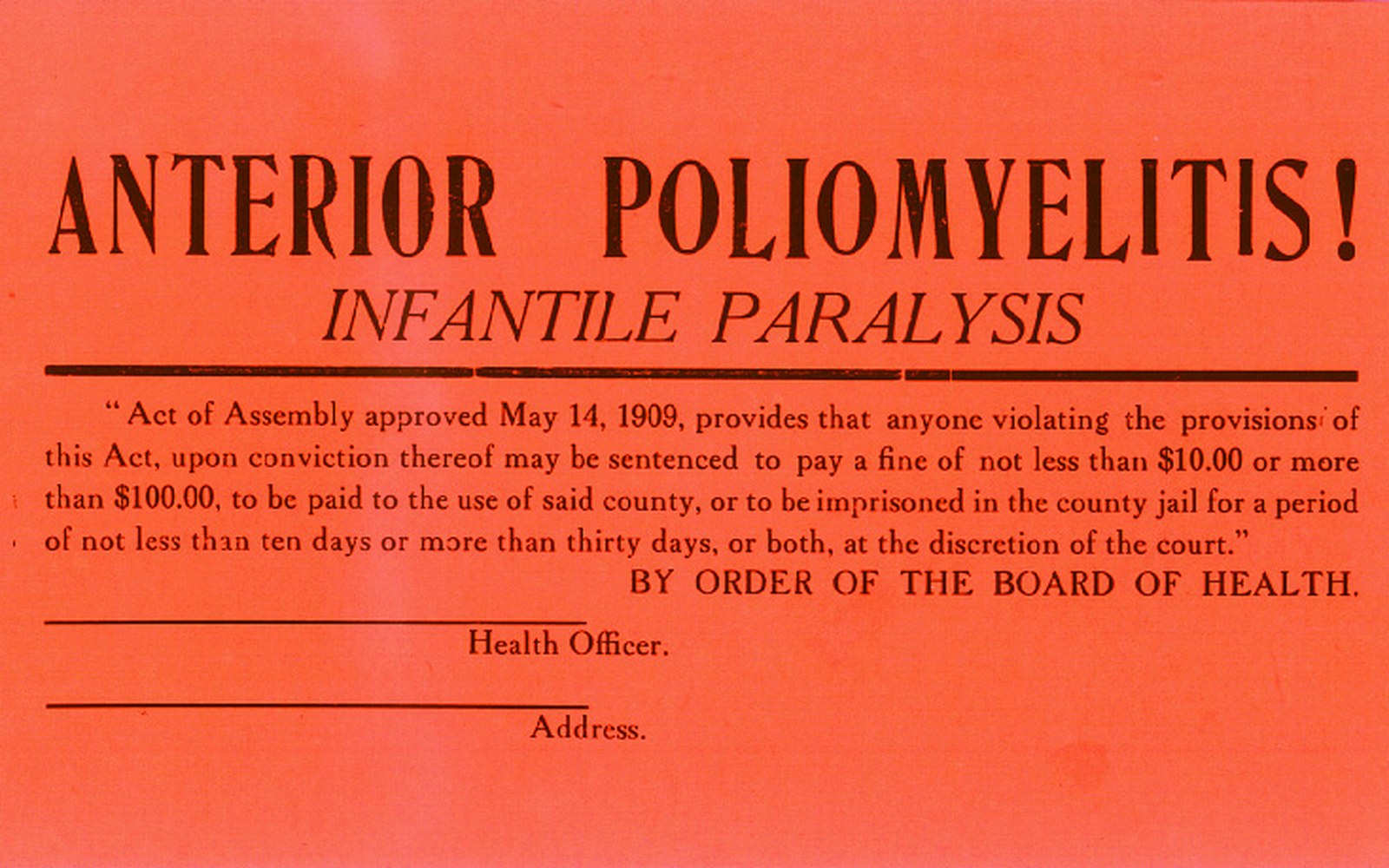
New York City's 1916 poliomyelitis epidemic arrived in June and did not release its grip until November. By the time the season closed, the city had recorded 8,900 cases and 2,400 deaths — figures that made it, at that moment, the largest single outbreak of poliomyelitis in recorded history. Across New York State the toll reached approximately 9,000 cases; the wider northeastern United States sustained more than 27,000 cases before the year ended. No earlier season had produced anything approaching those numbers, and no institutional structure existed to absorb them.
The borough distribution was uneven in ways that resisted simple explanation. Brooklyn bore the heaviest burden: its dense, low-lying neighbourhoods recorded the highest case density in the city. The Bronx, Queens, and Manhattan followed, with Staten Island the least affected. Within each borough the concentration was tightest in districts of recent immigrant settlement, where families occupied small apartments with shared courtyards and where the summer heat pushed children into the streets and communal water sources. Public health officers noted the pattern without being able to explain the mechanism — the transmission route for poliomyelitis remained genuinely disputed in 1916, and the response was improvised accordingly.
The city's health commissioner at the time, Haven Emerson (father of the later iron-lung manufacturer John Haven Emerson), directed a containment effort that drew simultaneously on quarantine logic, environmental sanitation, and nervous improvisation. Households with confirmed cases were placarded. Children under sixteen were barred from public amusements. Moves were made to restrict travel out of the city, a measure that prompted legal challenges and widespread evasion. Cats and dogs were impounded in the belief, unsupported but earnest, that they might serve as vectors. Roughly 72,000 cats were destroyed in the city that summer, a documented fact that illustrates better than almost anything else the degree to which the epidemic outran the knowledge available to manage it.
Beds, Buildings, and the Absence of Trained Hands

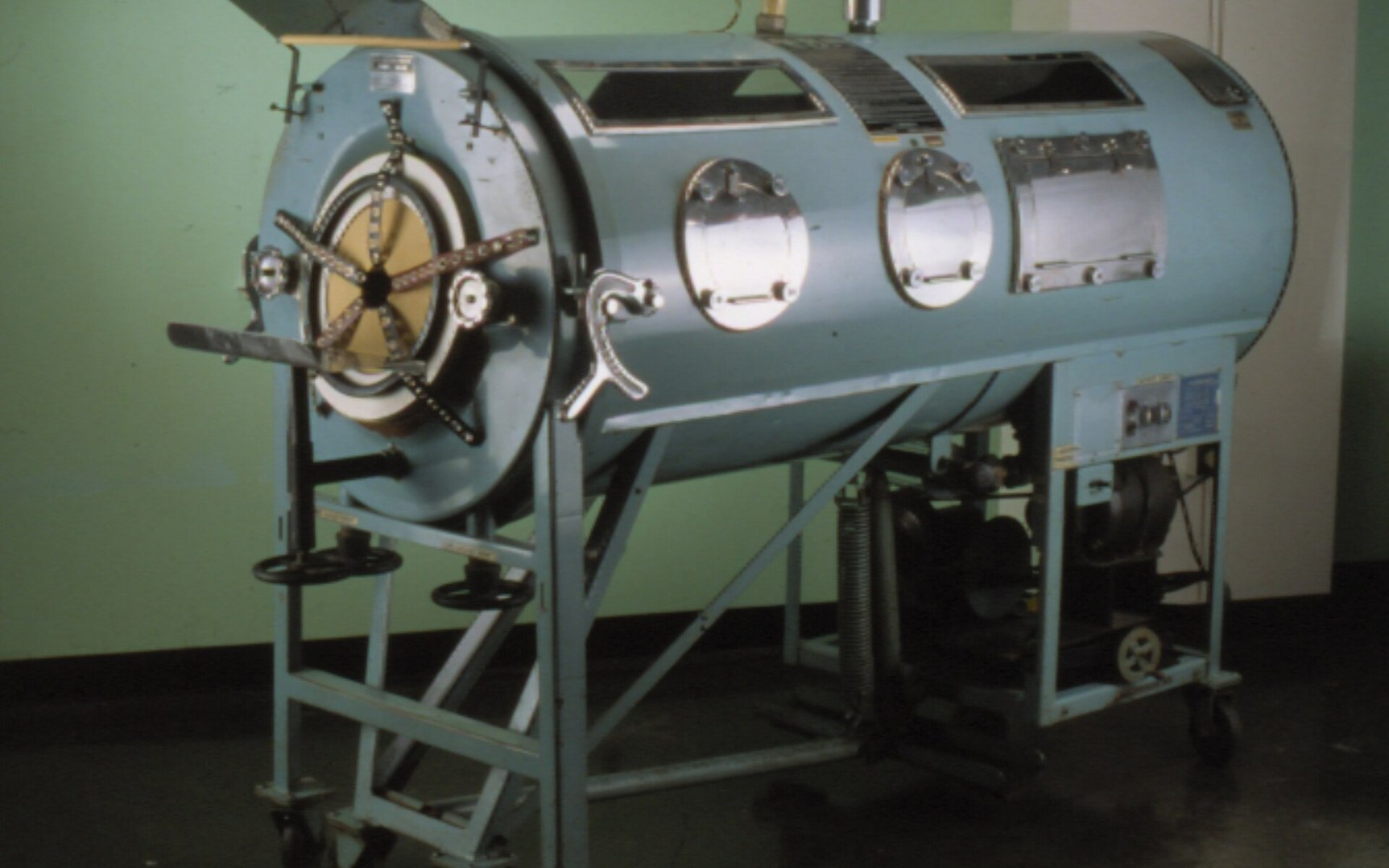
What the outbreak exposed most nakedly was not the failure of public understanding but the absence of any coherent institutional apparatus for managing large-scale paralytic disease. The city's hospitals were not built for this. Infectious disease wards filled within weeks. Bellevue Hospital, already the city's primary public institution for acute care, received a disproportionate share of severe cases. Field hospitals were improvised in municipal buildings. Children's cases, which constituted the great majority, were admitted to wards that had no established protocol for the aftercare that surviving paralysis required.
The acute phase of the disease, for those who survived it, gave way to a paralytic residue that demanded something the hospitals of 1916 had no name for and almost no trained staff to provide. The profession that would eventually supply that staff — organised in Britain as the Society of Trained Masseuses since 1894 and on the verge of becoming the Chartered Society of Physiotherapy — had no American equivalent with reach or numbers sufficient to the crisis. The American Women's Physical Therapeutic Association would not be founded until 1921. The reconstruction aide programme that Mary McMillan helped build for the US Army after 1918 lay two years in the future. In the summer of 1916, the gap between what was clinically needed and what was institutionally available was nearly total.
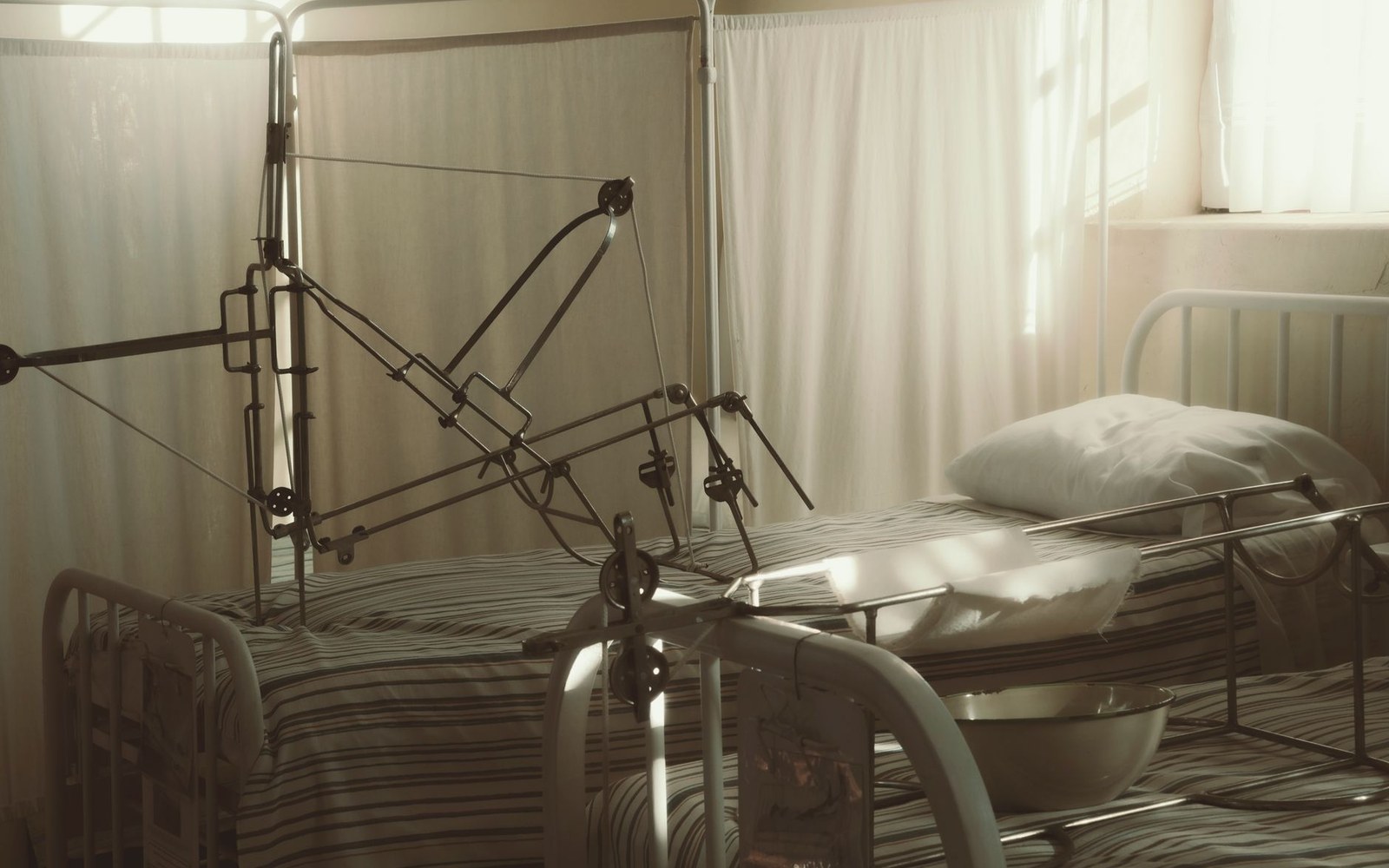
What filled that gap, imperfectly, was a mixture of nurses trained in passive movement, untrained family members working from written instructions, and a small number of practitioners schooled in Swedish gymnastics — the programme of systematic movement exercise developed by Per Henrik Ling at the Royal Gymnastic Central Institute in Stockholm from 1813. None of this constituted a profession, and none of it was coordinated. Individual hospitals developed individual approaches, some more rigorous than others, and the results reflected that disparity. Children who survived severe paralysis in a well-staffed ward fared measurably better than those who survived in institutions without any trained aftercare, but no systematic comparison was attempted and no common standard existed to enforce.
The Institutional Aftermath
The 1916 epidemic did not, by itself, create the structures that would later manage poliomyelitis on a large scale. That process took decades and required further epidemics, the accumulated clinical experience of the interwar years, the specific institutional investment that Franklin D. Roosevelt's survival and advocacy catalysed after 1921, and eventually the mass-mobilisation model of the Warm Springs Foundation from 1927 onward. But 1916 established the problem in terms that public health authorities and hospital administrators could no longer ignore.
The New York City Department of Health produced detailed epidemiological reports on the season, including borough-by-borough case counts and mortality rates, that became reference documents for subsequent outbreak management across the United States. The data established what clinicians had observed case by case: that survival of the acute phase at scale created a secondary demand — for movement, for supported ambulation, for the prevention of contracture — that no existing department was equipped to meet.
Nationally, the 1916 season accelerated discussions that had been proceeding in isolation within hospital gymnastics departments, among physicians interested in orthopaedic aftercare, and within the nascent community of trained masseuses and movement therapists. Robert Jones and Agnes Hunt had already demonstrated at Oswestry, in the years before 1916, that systematic physical aftercare changed the outcomes of paralytic and orthopaedic cases. That demonstration remained largely confined to its originating institution. The epidemic of 1916 supplied the scale of need that made ignoring such evidence professionally indefensible.
The Infantile Paralysis Emergency Committee, formed in New York during the outbreak, attempted to coordinate relief across institutions and boroughs. It succeeded partially. What it could not do — because the trained people did not yet exist in sufficient numbers — was provide consistent physical aftercare to the thousands of children who survived with residual paralysis. That failure was documented. It entered the professional literature that shaped the organisations founded in the years immediately following. When the American Women's Physical Therapeutic Association drafted its founding purposes in 1921, the memory of what 1916 had revealed about institutional unpreparedness was recent enough to be specific.
The epidemic of 1916 was not the worst poliomyelitis season the United States would experience — the 1952 season, with about 57,600 reported cases, surpassed it — but it was the first to impose the problem at a scale that made improvisation visibly inadequate. Every institutional structure that would later manage the disease more effectively — the trained therapist, the equipped ward, the coordinated protocol — was built, at least in part, in response to what New York's summer of 1916 made impossible to avoid.