Measuring the Body on Paper: Goniometer and Dynamometer
Why Numbers Changed What Physiotherapy Could Claim
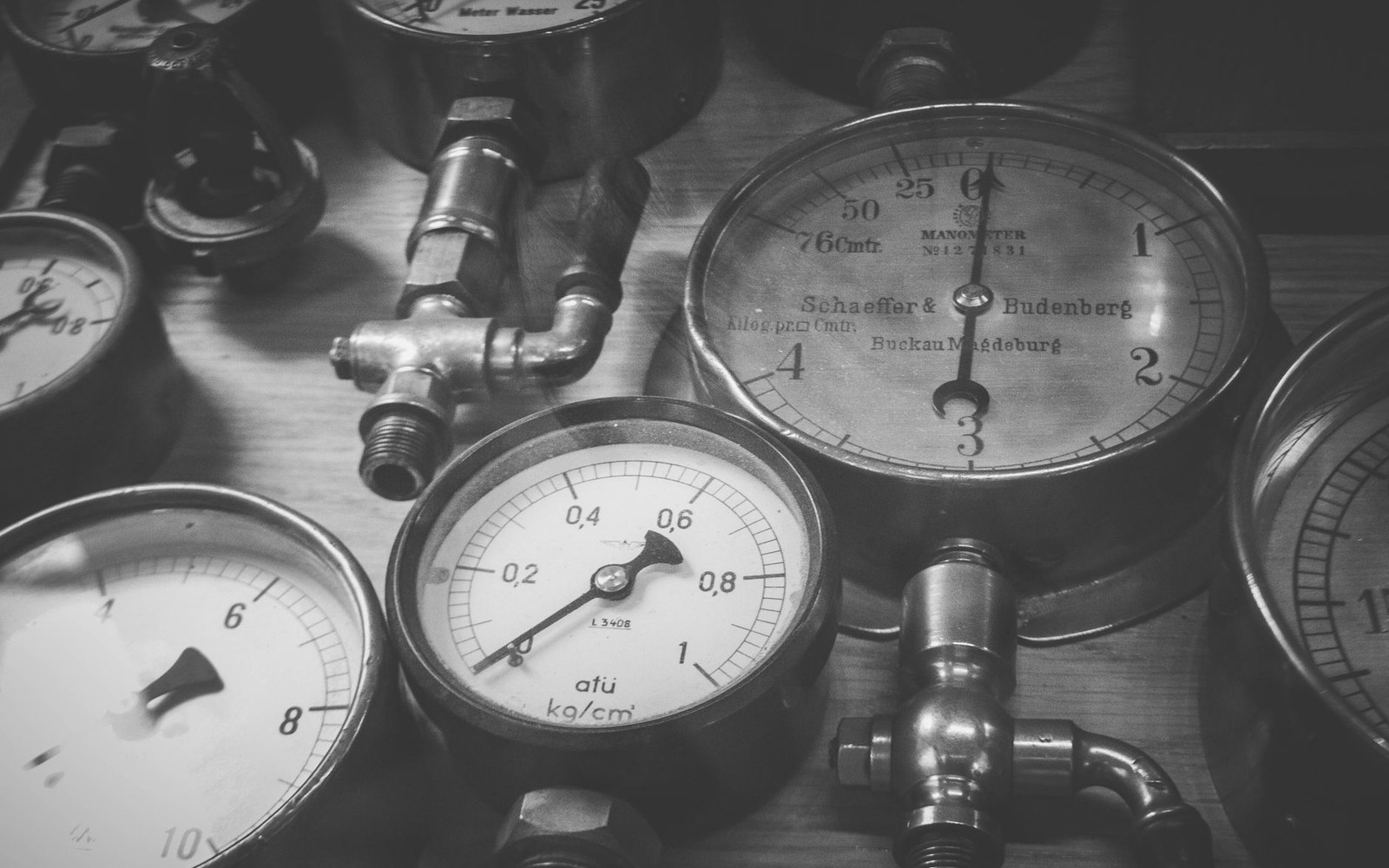
A profession gains standing partly through what it can write down. Before the goniometer and the hand dynamometer entered routine use, the physiotherapist's record of a patient's progress consisted largely of qualitative description — the limb "improved," the grip "stronger," the movement "freer." Such language satisfied no auditor, convinced no medical committee, and left no usable baseline for a returning patient. The two instruments changed that. Each converted a physical fact — the arc of a joint, the force of a hand — into a figure on a form, and figures could be compared, contested, and filed.

The goniometer, from the Greek for angle-measuring, is mechanically simple: two arms joined at a pivot, with a protractor scale at the hinge. Placed against a limb, its arms follow the two segments of a joint, and the scale reads the angle between them in degrees. Early versions in clinical use were adapted from draughtsmen's instruments; the refinement into a purpose-made clinical tool belongs to the first decades of the twentieth century, when orthopaedic surgeons and the growing cadre of trained masseuses and reconstruction aides needed a shared vocabulary for reporting outcomes. By the time the American Women's Physical Therapeutic Association was founded in 1921 — reconstituted shortly after from Mary McMillan's wartime organisation — a standardised approach to joint measurement was already a professional aspiration. The Chartered Society of Physiotherapy, which had obtained its royal charter in 1920, was facing the same demand on the British side: documenting the results of treatment for the war-injured required numbers, not impressions.
Chronological anchors
- Pre-1921goniometer adapted from draughtsmen's instruments into clinical use
- 1920Chartered Society of Physiotherapy royal charter; demand for documented outcomes on the British side
- 1921American Women's Physical Therapeutic Association founded
- 1940s–early 1950spolio epidemic wards: dynamometer as daily clinical record
Standardisation of which bony landmarks to align the goniometer against, and which plane of movement to record, took longer than the instrument itself. The landmark study by Florence Kendall and her collaborators, whose muscle-testing manuals from mid-century became the working reference for a generation of practitioners, sat within a broader effort to make the body's mechanics reproducible on paper. The goniometer was part of that same project: a shared protocol meant that a reading taken in Liverpool could mean the same thing as one taken in Los Angeles County.
The dynamometer's history runs in parallel. The principle of measuring grip or push against a calibrated resistance pre-dates physiotherapy as a profession — nineteenth-century physiologists used spring dynamometers to study fatigue in healthy subjects. What changed was the context. As rehabilitation wards after both world wars expanded their patient loads, a documented grip-strength figure became a clinical record rather than a laboratory curiosity. The hand dynamometer — a squeezable instrument with a dial or graduated scale — gave the practitioner a number that could be charted week by week. A rising figure was evidence. It could justify continued treatment; it could demonstrate that a reconstruction aide or a hospital physiotherapist had done something measurable with a patient's time.
The instruments' institutional moment came most sharply during the polio epidemics. In the crowded respiratory and rehabilitation wards of the 1940s and early 1950s, when Rancho Los Amigos and other large centres were managing patients in iron lungs and then transferring survivors into long programmes of muscle re-education, the dynamometer provided the only objective register of whether a muscle group was returning. Herman Kabat's proprioceptive neuromuscular facilitation work in the same period was documented in part through such measurements, as was the debate over Elizabeth Kenny's methods, which generated hostile and sympathetic assessments alike — each side citing figures to anchor its claims.
Neither instrument was expensive or complex to manufacture. The goniometer belonged to the category of instruments a department could acquire in quantity and lose without crisis; the dynamometer was similarly durable and low-maintenance. Their significance was never technical. It was rhetorical and institutional: they placed physiotherapy inside the same frame of reference as medicine's other measurable disciplines, where a finding was a number, a number could be replicated, and replication was the condition of professional credibility. The plinth and the parallel bars furnished the room; the goniometer and the dynamometer furnished the record.