How a wartime emergency created the institutional conditions for a permanent American profession

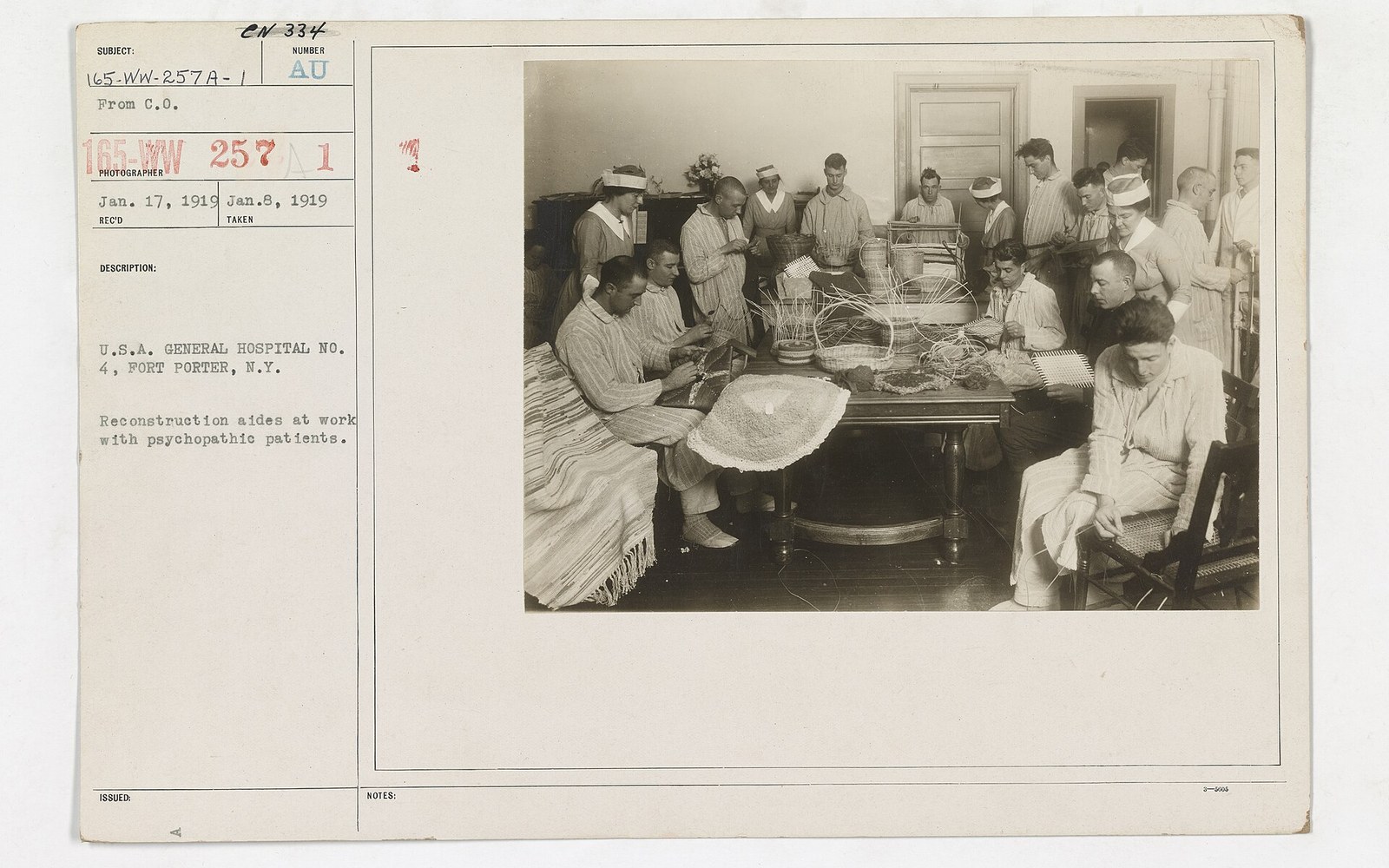
When the United States Army needed bodies trained in remedial exercise and massage to manage the wounded returning from France, it did not yet have a word for what those bodies did. The title it settled on — reconstruction aide — covered women deployed in physical and occupational therapy alike, most of them working in base hospitals and general hospitals across the eastern seaboard from 1918 onward. The term carried rank without commission: reconstruction aides held no military grade but wore uniform, drew government pay, and answered to the Army Medical Department.
Chronology
- 1813Ling establishes the Royal Gymnastic Central Institute, Stockholm
- 1915McMillan returns to the United States from clinical work in Britain
- 1918US Army's reconstruction aide programme operational; McMillan appointed chief aide
- November 1918Armistice; programme begins to contract
- January 1921American Women's Physical Therapeutic Association founded in New York City; McMillan elected first president
- 1922Association drops "Women's" from its name; men admitted
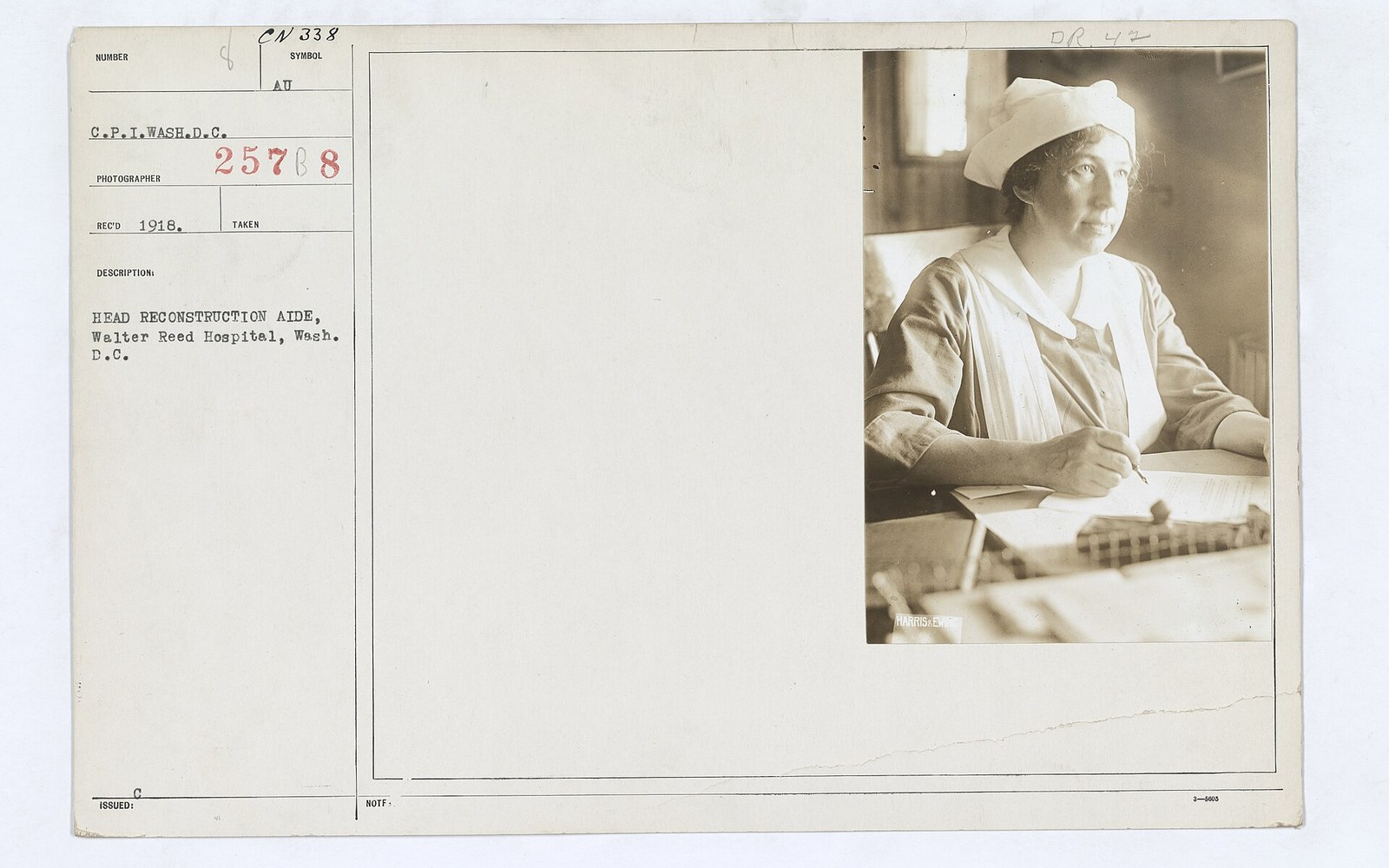
Mary McMillan was the figure who gave that programme its professional shape. Trained initially in physical education in Britain and holding a diploma from the Liverpool School of Massage, McMillan had worked in clinical settings in England before returning to the United States in 1915. By the time the Surgeon General's office began assembling a corps of aides in 1918, she was the most credentialed American candidate available, and she was appointed chief aide and administrator of the programme. Her duties were organisational as much as clinical: standardising training requirements, coordinating assignments, and establishing what the work actually was.
The programme's institutional anchor was Walter Reed General Hospital in Washington, D.C., the largest military medical facility in the country, where McMillan was based. Reconstruction aides trained there and at other designated sites under a curriculum that drew directly on the Swedish gymnastics tradition — the systematic movement exercises codified by Per Henrik Ling at the Royal Gymnastic Central Institute in Stockholm from 1813 — alongside manual massage and the use of hydrotherapy apparatus. The training was short by later standards, measured in weeks rather than years, but it was documented and examined, which distinguished it from informal bedside practice.
When the Armistice of November 1918 ended the acute demand, the Army's programme contracted rapidly. The question that remained was whether the workforce and the institutional framework it had created would dissolve or consolidate. McMillan's answer came in January 1921, when she convened the meeting in New York City at which the American Women's Physical Therapeutic Association was formally constituted. Membership at founding was small — the figure most cited in the profession's own histories is around thirty women — but the structure was deliberate: a defined membership criterion, elected officers, and a stated purpose of advancing physical therapeutics as a distinct discipline. McMillan was elected the association's first president.
The name changed within a decade. By 1922 the organisation had dropped the word "Women's" to admit men, becoming the American Physiotherapy Association, and it later reorganised as the American Physical Therapy Association, which remains the principal professional body for the field in the United States. The trajectory from wartime emergency to permanent institution had taken roughly three years.
What the reconstruction aide programme established was not primarily a clinical method but a precedent: that physical therapeutic work required trained practitioners, that those practitioners could be organised, and that the organisation could negotiate with government and medicine on the profession's behalf. The epidemic context of the 1920s and 1930s — and the mass crisis of poliomyelitis — would test each of those propositions in turn. By 1921, at least, the institutional vehicle existed to carry them forward.