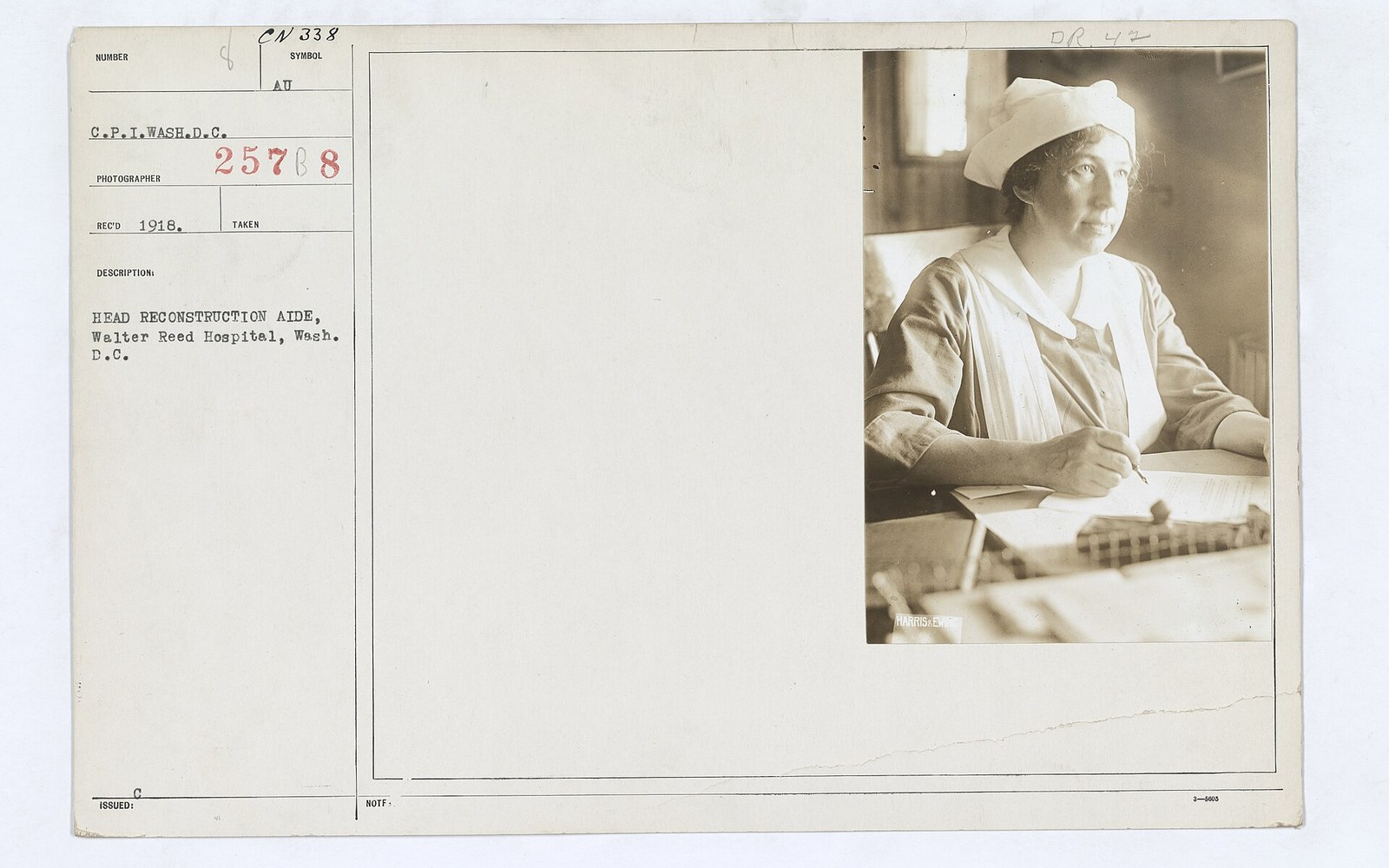
She trained in England, served in France, and then organised a profession from nothing. The documented record, date by date.
Mary McMillan studied and worked in Britain during the 1900s and 1910s, training under conditions that the Royal Gymnastic Central Institute's Swedish gymnastics tradition had shaped across European therapeutic practice. She held qualifications from British institutions — including affiliation with what would become the Chartered Society of Physiotherapy — before she returned to the United States. That transatlantic grounding was not incidental: it gave her both the technical vocabulary and the institutional model she would later transplant.
Chronology
- 1900s–1910sMcMillan trains and works in Britain; holds British professional qualifications
- 1917United States enters the First World War; recruitment of reconstruction aides begins
- 1918Reconstruction aide programme formalised; McMillan holds supervisory command
- 1918–1920Postwar period; McMillan works in US hospital settings; no national professional body exists
- January 1921American Women's Physical Therapeutic Association founded in New York City; McMillan elected first president
- 1921Massage and Therapeutic Exercise published; one of the earliest American professional texts in the field
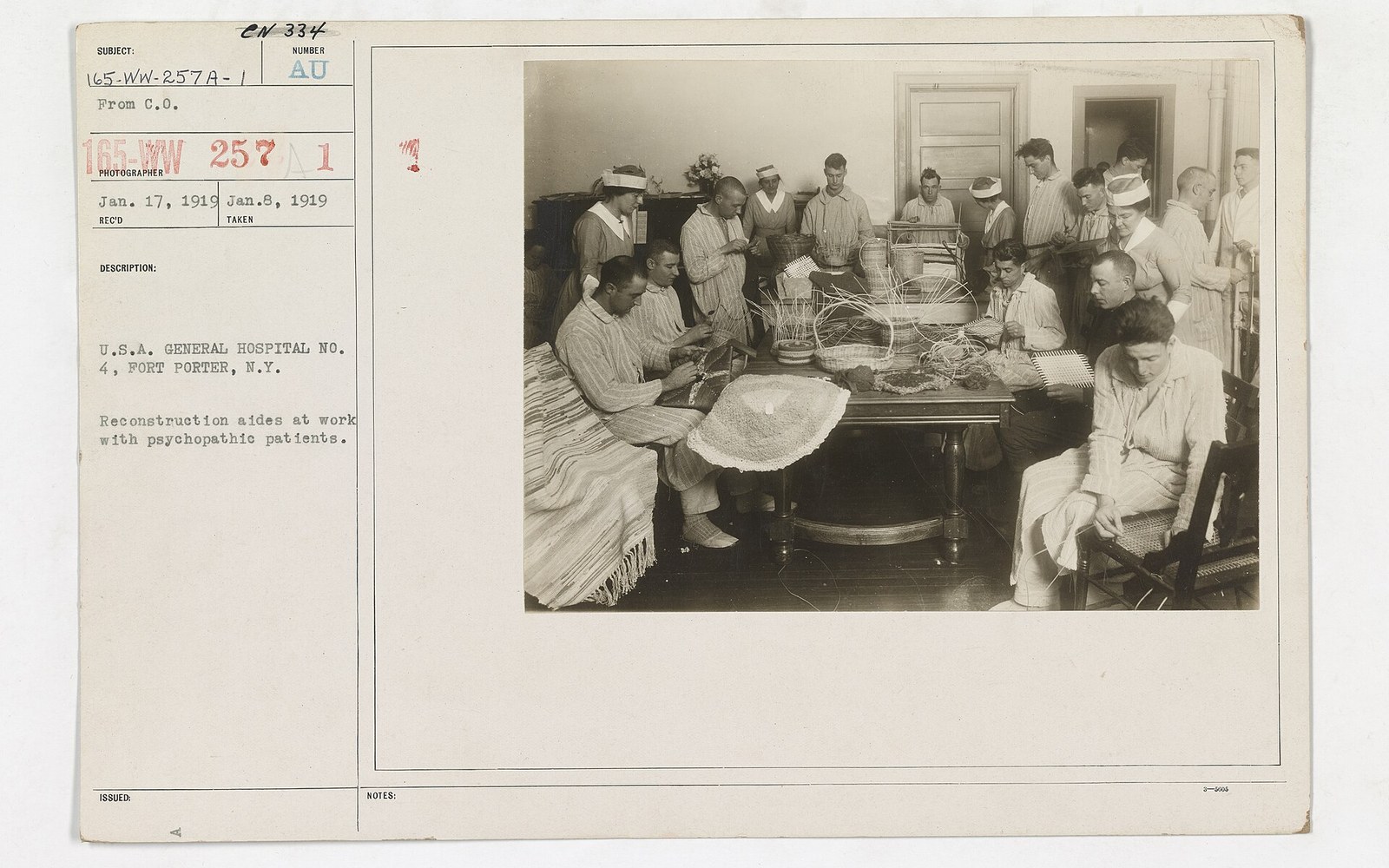
When the United States entered the First World War in 1917, McMillan was among the first women recruited to treat wounded soldiers. The Army designated these practitioners reconstruction aides — the title given to women trained in physical and occupational therapy deployed by the US Army from 1918 to rehabilitate wounded soldiers. McMillan served in this capacity and is documented as having been assigned to command responsibilities over the programme, coordinating aides across military hospitals in the United States. Her position placed her at the organisational centre of what was, in effect, the first systematic deployment of physical therapeutic work under American military authority.
The reconstruction aide programme was improvised under wartime pressure. There was no licensing framework, no agreed curriculum, no professional register. Women arrived with varying credentials — some trained as masseuses, some in remedial exercise, some in occupational methods. McMillan's role required her to impose coherence on that variation: to assign personnel, establish workable routines, and report upward to medical officers who held formal authority over the wards. The work was administrative as much as clinical, and it left her with a precise understanding of what an organised profession would need to function.
1921 and the Founding Document
She returned to the United States after the armistice and worked in hospital settings through the early postwar years. The gap between her wartime experience and the profession she wanted to build was visible to anyone examining the landscape: no national body, no journal, no agreed credentialing. Other countries had moved. The Society of Trained Masseuses in Britain had been incorporated since 1894 and received its royal charter in 1920. American practitioners had no equivalent anchor.
In January 1921, McMillan was among those who convened in New York City to establish the American Women's Physical Therapeutic Association. The organisation was founded with McMillan as its first president — a position that placed her name on the founding documents at the moment of the profession's formal American origin. Membership at the outset numbered in the dozens. The name itself encoded the moment's assumptions: the qualifier Women's reflected the demographic reality of the field and would later be dropped when the organisation reorganised as the American Physical Therapy Association.
The founding was not a ceremonial act. The new association needed to define what counted as adequate training, to communicate with hospital administrators, and to establish itself in relation to medicine's existing hierarchies. McMillan's British credentials and wartime record gave those negotiations credibility she could not have assembled from American practice alone. Her 1921 textbook, Massage and Therapeutic Exercise, provided the association with a published technical reference at the moment it most needed one, documented in the historical record as one of the earliest American professional texts in the field.
The career arc — Britain, France, New York — was not a journey toward influence so much as a sequence of contingent postings that accumulated into authority. By 1921 McMillan held the title, the publication, and the organisational chair. The profession she helped formalise would change its name, expand its membership, and revise its methods across the following decades. What the record shows is simply where it started, and who was at the table.